
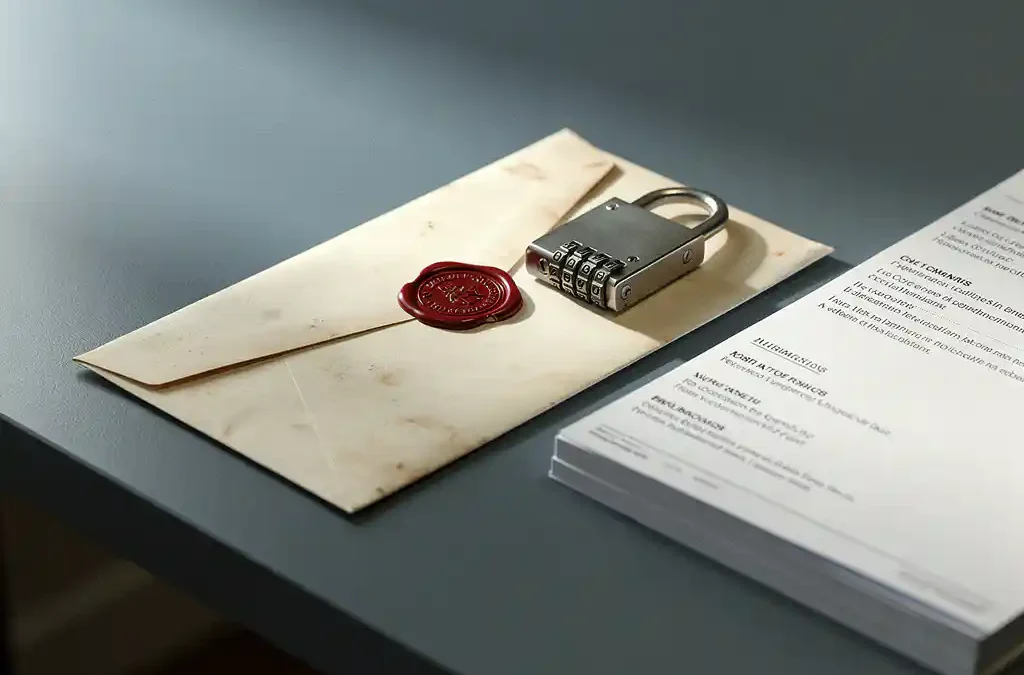
Securing your data when outsourcing print work starts with choosing a partner who demonstrably meets recognized security standards, such as ISO 27001, and is willing to sign a data processing agreement. Confidential files, brand guidelines, and customer data you share for a print job deserve the same level of care as any other business document. In this article, we answer the most frequently asked questions about information security when outsourcing print work, so you can get started fully prepared. Do you already have a question? Feel free to contact us — we’re happy to help.
What risks come with outsourcing print work?
When outsourcing print work, you share files that may contain brand-sensitive information, product specifications, or even personal data. The main risks are unauthorized access to those files, insecure storage at the print partner’s end, and the absence of clear agreements about what happens to your data after the job is completed.
Print files may seem harmless at first glance, but they often contain more than just a nice design. Think of customer names on personalized mailings, internal product codes, or confidential marketing campaigns that haven’t yet been made public. If a print partner fails to secure those files properly, they can leak through unsecured email, shared servers, or careless password management.
There is also the risk of non-compliance with the GDPR. If your print work contains personal data and you pass it on to a third party without the proper legal agreements in place, you as the client are responsible for any resulting data breaches. This can lead to fines and reputational damage.
How do I know whether a print partner handles my data securely?
The most reliable indicator is a valid ISO 27001 certificate. This international standard for information security demonstrates that a print partner has taken structural measures to protect data, from access management to incident response. Always ask for the certificate and verify its validity.
In addition to ISO 27001, ISO 9001 is a useful complement: this standard confirms that the quality processes surrounding production are properly organized. A partner holding both certificates shows that both the end product and the security of your information are taken seriously.
Also look at how the partner handles sub-processors. Many print companies work with external suppliers. If your files are passed on to a third party without your knowledge, that significantly increases the risk. A transparent partner will inform you of this and ensure that sub-processors meet the same security requirements.
At Crestec Europe, we were recertified in 2024 for both ISO 9001 and ISO 27001 for a period of three years. This means your documentation and business data are in safe hands with us, backed by established processes for quality and information security.
How do I send files securely to a print partner?
Always send print files through a secure channel. Avoid standard email attachments for large or sensitive files, and instead opt for a secure file transfer portal, encrypted cloud storage, or an SFTP connection. A professional print partner will offer one of these options as standard.
Practical steps for secure file transfer:
- Use a secure upload portal provided by the print partner, preferably with two-factor authentication.
- Encrypt files before sending if you are not using a secure portal.
- Avoid sharing files via public cloud services without access restrictions.
- Set an expiration date on shared links so that files do not remain accessible indefinitely.
- After sending, always confirm that the partner has received the files, and request deletion once the job is complete.
Beyond the transfer itself, it is important to know how long the print partner retains your files and who has internal access to them. Limit the distribution of files to those who genuinely need them for the job.
What should a data processing agreement for print work include?
A data processing agreement is required under the GDPR whenever you share personal data with a third party. For print work, this applies as soon as the files contain names, addresses, or other identifiable information. The agreement must include at a minimum: the purpose of the processing, which data is being processed, how long it will be retained, and how it will be secured.
For print work specifically, the following points are essential:
- Retention period: How long does the print partner retain your files after the job is completed, and when will they be deleted or destroyed?
- Sub-processors: Which third parties will have access to your data, and are they subject to the same obligations?
- Security measures: What technical and organizational measures does the partner take to protect your data?
- Data breach notification: Within what timeframe will you be informed if a data breach occurs?
- Audit rights: Do you have the right to verify or have verified that the agreement is being complied with?
A print partner who refuses to sign a data processing agreement is not a reliable choice for sensitive jobs. Treat willingness to enter into such an agreement as a basic requirement.
What questions should I ask a print partner about information security?
When selecting a print partner, ask targeted questions about their security practices. Good questions reveal not only what a partner does, but also how seriously they take information security as part of their service.
Use these questions as a guide during a conversation or quotation process:
- Do you hold a valid ISO 27001 certificate, and may we see it?
- Through which channel do you want us to submit files, and how is that channel secured?
- Who within your organization has access to our files?
- Do you work with sub-processors, and how do you ensure security on their end?
- How long do you retain our files after the job is completed?
- Are you willing to sign a data processing agreement?
- How do you handle a data breach, and within what timeframe will you notify us?
A partner who answers these questions promptly and thoroughly inspires confidence. Hesitation or vague answers are a signal to keep looking. Information security is not a secondary concern — it is an integral part of service quality.
At Crestec Europe, we combine secure print solutions with established quality processes, supported by our ISO 9001 and ISO 27001 certifications. From file transfer to delivery, we handle your data with the care you would expect from a partner that has been active in document services since 1995. Ready to take the next step? Contact us and discover how we can set up your print process securely and efficiently.
Frequently Asked Questions
What should I do if I suspect my print files have been leaked by a partner?
Contact the print partner immediately and request written confirmation of what happened and which files were involved. If the files contain personal data, you as the data controller are required to report a data breach to the relevant supervisory authority within 72 hours. Document all communication and steps you take so you can demonstrate that you responded appropriately.
Do I also need a data processing agreement if my print work contains no personal data?
If the print files contain no personal data, a data processing agreement under the GDPR is not legally required. However, it is still advisable to put written agreements in place covering confidentiality, retention periods, and file ownership — for example, through a non-disclosure agreement (NDA). Brand-sensitive information, unreleased campaigns, or product specifications deserve legal protection even without personal data.
How do I verify whether a print partner's ISO 27001 certificate is still valid?
Ask the print partner for a copy of the certificate and check the validity period and the name of the certifying body. You can also independently verify its validity through the certifying body’s website or via the relevant national accreditation register. Also make sure the certificate covers the activities relevant to you, such as file management and print production, and not just a minor part of the business.
What are common mistakes when submitting print files in terms of security?
The most common mistake is sending sensitive print files as a standard email attachment, without encryption or access restrictions. Other frequent errors include sharing files via a public cloud link without an expiration date, reusing the same file for multiple jobs without checking whether outdated customer data has been removed, and failing to request deletion of files after the job is complete. A brief checklist before submitting files can significantly reduce these risks.
Can I, as a small business owner, also set requirements for a print partner's information security?
Absolutely. The GDPR makes no distinction based on company size: if you process personal data, the same obligations apply to a sole trader as to a large corporation. Moreover, setting security requirements for your print partner is simply good business practice, regardless of your company’s size. Many professional print partners have standard data processing agreements readily available and are accustomed to signing them with smaller clients as well.
How long may a print partner retain my files after a job is completed?
There is no legally fixed standard retention period for print files, but the principle of data minimization under the GDPR requires that data not be retained longer than necessary for its purpose. In practice, this ranges from immediate deletion upon delivery to a retention period of several months for potential reprints. Make concrete agreements about this in the data processing agreement or order confirmation, and for sensitive jobs, request written confirmation of deletion.
What is the difference between ISO 27001 and ISO 9001, and why are both relevant for print work?
ISO 27001 focuses specifically on information security and ensures that an organization has taken structural measures to protect data, such as access management, encryption, and incident response. ISO 9001 focuses on quality management and ensures that production and service delivery processes are consistently and reliably organized. For print work, both are relevant: ISO 27001 gives you assurance about the security of your files and data, while ISO 9001 guarantees the quality of the end product and the processes surrounding it.
Related Articles
- How do I ensure my printed materials align with the cultural expectations of each market?
- Can I have my printed manuals distributed directly to my dealers in Europe?
- What is the difference between digital printing and offset printing for large print runs?
- Who can format and print my documentation?
- How do you adapt UI design for different cultures?