
The proofreading process for multilingual print materials takes place across several coordinated rounds in which translators, DTP specialists, and client approvers work together to ensure that every language version is visually and substantively correct before it goes to the printer. Unlike single-language print projects, multilingual projects require text differences, layout adjustments, and cultural nuances to be reviewed separately for each language. In this article, we answer the most frequently asked questions about this process so you know exactly what to expect. Have questions about your specific project? Feel free to contact us and we’ll be happy to help.
What steps does a multilingual print proof go through?
A multilingual print proof typically goes through five core steps: translation and DTP processing per language, an internal quality check, creation of the proof itself, a client approval round, and finally the definitive release for production. Each step builds on the previous one and is designed to catch errors before they go to print.
In the first phase, the translated text is placed into the original layout file by a DTP specialist. Because text in other languages can be longer or shorter than the original, fonts, line spacing, and text boxes must be adjusted for each language. This is followed by an internal proofreading stage in which both linguistic quality and visual presentation are assessed.
A digital or physical proof is then created and sent to the client for approval. The client reviews the content in their own language, after which any corrections are applied. Only once all language versions have been approved does the file go to the printer. This structured approach prevents costly corrections after printing.
How does a single-language proof differ from a multilingual proof?
The key difference is complexity and coordination. With a single-language proof, one team reviews one file. With a multilingual proof, multiple language versions are processed in parallel or sequentially, with each file having its own DTP adjustments, its own approvers, and its own feedback cycle. The risk of inconsistencies between versions is therefore considerably greater.
Another difference is the technical challenge of layout. A sentence that is ten words long in English might become fifteen words in German or just five characters in Japanese. This means the page layout must be rebalanced for each language without losing the overall design. With single-language print work, this problem simply does not exist.
Finally, multilingual print work requires centralized coordination that is unnecessary in single-language projects. Someone must ensure that all language versions reflect the same version of the source content, that graphic elements are consistent, and that the timeline remains achievable across all languages.
Who is involved in approving a multilingual print proof?
Approval of a multilingual print proof typically involves three parties: the language specialist or translator who verifies content accuracy, the DTP specialist who monitors visual quality, and the client or their local contact who gives final approval for each language version. On larger projects, a project manager may also handle coordination.
The client plays a crucial role, especially when it comes to languages they do not speak themselves. In that case, it is advisable to designate a local contact person for each language region who can review the proof. This could be a regional marketing manager, a local distributor, or a native speaker within the organization.
On our end, our project managers and DTP specialists monitor quality before a proof reaches the client. This ensures that the client only reviews content that is already up to standard both substantively and visually, making the approval round more efficient.
What are common problems with multilingual print proofs?
The most common issues with multilingual print proofs are text overflow caused by longer translations, incorrectly rendered special characters or fonts, inconsistent color profiles between language versions, and delays caused by approvers located in different time zones or countries. These problems are predictable and largely preventable with good preparation.
Text overflow occurs when a translation is significantly longer than the source text, causing text to spill outside the text box or disrupt the layout. This is a particular challenge with languages such as Finnish, German, or Polish, which typically require more space than English or Chinese.
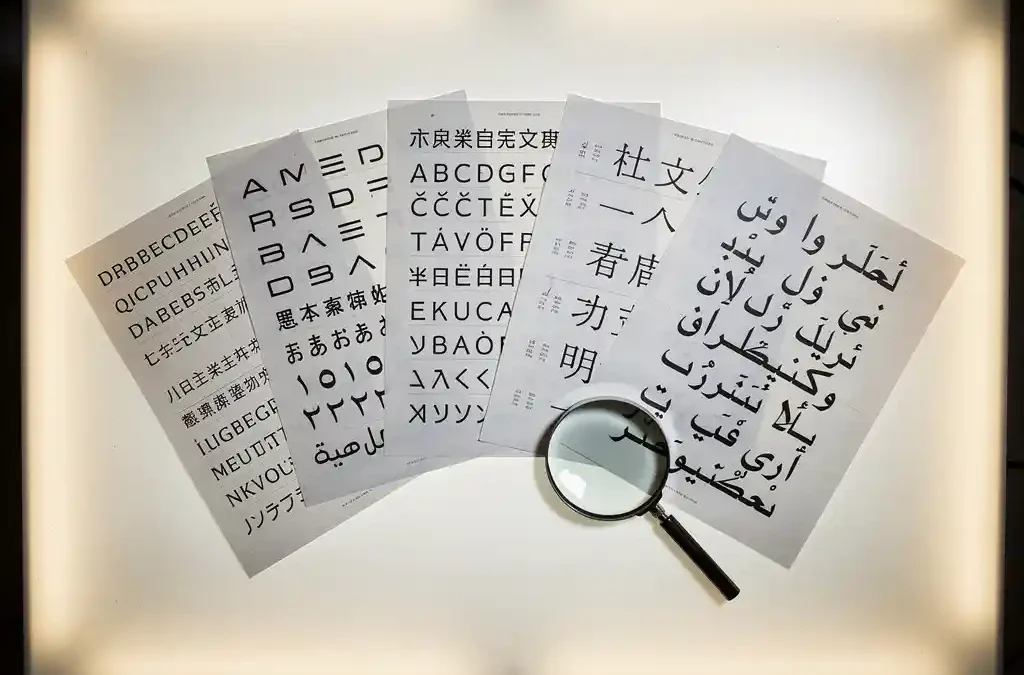
Font issues arise when a typeface does not support certain characters — for example, Arabic or Cyrillic scripts. If this goes unnoticed in time, blank boxes or question marks will appear in the printed output. Another common pitfall is approvers responding too late, which causes the entire schedule for all languages to fall behind. Setting clear deadlines per language version prevents this problem.
How many proof rounds are normal for multilingual print work?
Two to three proof rounds per language version is standard for multilingual print work. The first round catches most corrections, the second round verifies that all changes have been applied correctly, and an optional third round serves as final confirmation. More than three rounds typically indicate an unclear briefing or late-stage content changes.
The number of rounds depends heavily on the complexity of the document and the quality of the source content provided. A well-prepared source text with clear formatting guidelines results in fewer correction rounds. Conversely, last-minute content changes to the source text mean that all language versions must be updated again, which quickly increases the number of rounds.
With our print solutions, we aim to make the process as efficient as possible so that two rounds are sufficient in most cases. We achieve this by conducting a thorough internal quality check before the proof is sent to the client.
How do you speed up the proofing process without compromising quality?
You can speed up the proofing process by starting early with an error-free source text, providing clear style guides and terminology lists, scheduling approvers in advance, and using digital proofing tools that centralize feedback. Each of these measures shortens turnaround time without sacrificing the quality of the final output.
Start with a strong source text
An error-free, finalized source text is the single greatest time-saver in the entire process. Every change to the source text after translation has begun means additional work across all language versions. Invest time in finalizing your content before translation starts, and establish an internal approval procedure for the source text.
Schedule approvers proactively
Delays in the proofing process are often caused not by technical issues, but by the right people being unavailable when their approval is needed. Schedule approvers into the project plan before the project begins. Give them a clear deadline and explain exactly what is expected of them so that the review can be focused and swift.
A partner that combines translation, DTP, and printing under one roof significantly reduces turnaround time by eliminating handoffs between different suppliers. Want to know how we can streamline your multilingual print process? Contact us and we’ll discuss the options for your project.
Frequently Asked Questions
Can I still make content changes after translation has already started?
Technically yes, but it is strongly discouraged. Every content change to the source text after translation has begun must be applied to all language versions, resulting in additional translation costs, renewed DTP adjustments, and extra proof rounds. If a change is truly necessary, communicate it to your project manager as soon as possible so that the impact can be minimized.
As a client, how do I know whether the translation in a language I don't speak is correct?
The best approach is to designate a native speaker within your organization or network — such as a local distributor, regional marketing manager, or business partner — to review the proof for that language. In addition, our own language specialists carry out an internal quality check before the proof reaches you, so that substantive and linguistic errors have already been largely identified.
What is the difference between a digital and a physical proof, and which one do I need?
A digital proof (also known as a soft proof) is a PDF or online rendering that is quick to share and ideal for checking text, layout, and formatting. A physical proof is actually printed and is essential when color accuracy, paper type, or finishing details — such as laminate or varnish layers — need to be assessed. For most multilingual projects, a digital proof is sufficient for text review, while a physical proof is recommended for final color and material approval.
How do I handle languages that are written right to left, such as Arabic or Hebrew?
Right-to-left (RTL) languages require a complete mirroring of the layout: not only does the text direction change, but the page structure, column order, and placement of images must also be adjusted. This is a specialized DTP task that requires specific software and experience. Always check with your print partner in advance whether they support RTL languages, so this can be incorporated into the project plan in good time.
What happens if language versions require different numbers of pages due to differences in text length?
This is a common scenario, particularly with languages such as German or Finnish that take up considerably more space than the source language. Solutions range from adjusting font size and line spacing to rearranging layout elements or, in extreme cases, adding an extra page. Your DTP specialist will discuss the options with you and ensure that the design remains visually consistent regardless of the solution chosen.
How do I maintain consistency in terminology and brand identity across all language versions?
The most effective approach is to provide a brand glossary and a style guide before the project begins. These establish fixed translations for product names, slogans, and brand-specific terms so that translators make the same choices across all languages. Combine this with a Translation Memory — a database of previously approved translations — to ensure consistency over the long term and reduce translation costs on future projects.
What is a realistic timeframe for a multilingual print project from start to finish?
Turnaround time depends on the number of languages, the size of the document, and the complexity of the layout, but as a guideline you can expect one to three weeks for a standard multilingual project involving four to eight languages. Projects with more than ten languages, RTL languages, or complex formatting can take four to six weeks. By starting early, scheduling approvers in advance, and working with a partner that offers integrated translation and DTP services, you can significantly reduce this turnaround time.
Related Articles
- How do I adjust my print materials for different paper sizes by country?
- How do I choose between a local printer and an international print partner?
- What are the benefits of printing manuals?
- How do I build trust with customers who don't speak my language?
- What tools are essential for software localisation?