
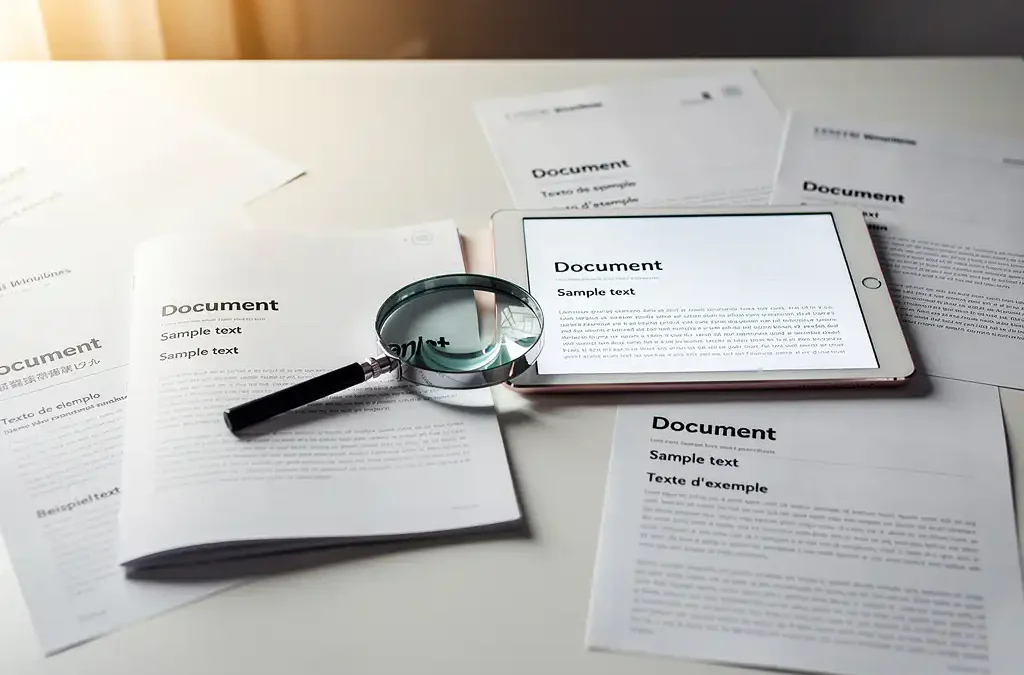
Yes, printed and digital documentation can be combined excellently in a single integrated solution. By managing both formats from one central workflow, you save time, prevent inconsistencies, and ensure your message is coherent across every channel. If you’re curious what this kind of approach looks like in practice, you’re always welcome to contact our team with no obligation. In this article, we answer the most frequently asked questions about integrated documentation, from the benefits to choosing the right solution.
What are the benefits of combining print and digital?
Combining printed and digital documentation in a single solution ensures consistency in style, content, and branding, while simultaneously leveraging the strengths of both media types. You reduce duplication of effort, lower costs, and shorten turnaround times because translation, layout, and production all flow from one coordinated process.
In practice, this means a product manual can be available both as a printed insert and as an interactive PDF or online help center, without the content needing to be managed twice. Changes to the source text are made once and published to all desired output formats. This is especially valuable for companies that regularly release product updates or operate across multiple languages and markets.
An integrated approach also delivers a better customer experience. Customers who receive a product expect the printed documentation to match what they find online. Inconsistency between channels creates confusion and undermines trust in a brand. A unified documentation strategy prevents this and strengthens the professional image of your organization.
How does an integrated documentation workflow work in practice?
An integrated documentation workflow combines translation, DTP, and print production into one seamless process, with every step aligned to the next. Rather than coordinating with multiple vendors, everything runs through a single point of contact that oversees the entire journey.
The process typically begins with the preparation of source documents. Texts are translated and localized, after which the DTP team adapts the layout for both digital and printed output. This involves accounting for text expansion in certain languages, readability on screen versus paper, and specific print requirements such as color profiles and bleed margins.
The files are then prepared for their respective channels: a print-ready PDF for the printer, an optimized version for digital distribution, and optionally a structured format for use in a content management system or knowledge base. Because translation, layout, and production flow seamlessly into one another, the risk of errors is lower and turnaround times are significantly shorter than with a fragmented approach involving multiple separate parties.
Which documentation formats are suitable for both print and digital?
Not every documentation format lends itself equally well to both print and digital use, but there are several formats that work excellently for both purposes. The most versatile options are PDF, XML-based formats such as DITA, and structured Word or InDesign files that can be published to multiple outputs.
PDF is the most common format for documents distributed both in print and digitally. A well-formatted PDF document can be sent directly to the printer and simultaneously placed on a website as a downloadable file. For more dynamic applications, such as technical manuals that are updated regularly, an XML-based structure offers greater flexibility, since the content is independent of the layout and can easily be converted to different output formats.
Other suitable formats include:
- InDesign files, used by DTP specialists for high-quality printed materials and exportable to digital formats
- HTML5 documents, which can be displayed both online and in offline viewers
- ePub formats, suitable for e-readers and digital distribution while preserving layout
- Structured Word documents, as a starting point for further layout and publication
The choice of format depends on the complexity of the document, the frequency of updates, and the technical infrastructure of your organization.
What is the difference between localization for print and for digital media?
Localization for print and for digital media share the same core purpose — adapting content to a specific language and culture — but differ significantly in technical execution and key considerations. Print localization revolves around fixed layouts, color accuracy, and physical production requirements, while digital localization takes into account screen resolution, interactivity, and platform-specific requirements.
Localization for printed documentation
With printed documentation, layout is paramount. Texts in German or French are typically longer than in English, which means the DTP specialist must readjust the layout to prevent text overflow. Color profiles also play a role: what looks vibrant on screen may appear different once printed. Languages written right to left, such as Arabic or Hebrew, require a fully mirrored layout. All of these aspects must be reviewed and approved before going to print.
Localization for digital media
Digital localization offers more flexibility but comes with its own challenges. Text can be displayed dynamically, which means text expansion is less likely to cause problems. At the same time, fonts, character encodings, and user interfaces must be adapted for each target language. For video animations and multimedia content, subtitling, voice-over, or dubbing must also be considered. Digital files are also updated more frequently, making structured version control essential.
When is a one-stop documentation solution the best choice?
A one-stop documentation solution is the best choice when you are managing multiple languages, formats, or channels simultaneously and consistency, speed, and quality control are top priorities. The more links there are in the documentation chain, the greater the risk of errors, delays, and miscommunication between parties.
For companies active in the technology or manufacturing industry, where documentation may be a legal or contractual requirement, an integrated approach is particularly valuable. A partner that offers translation, DTP, print, storage, and distribution under one roof eliminates coordination risks and shortens the time between a product update and the moment the updated documentation reaches the market.
At Crestec Europe, we offer exactly that integrated approach, backed by ISO 9001 certification for quality management and ISO 27001 certification for information security. Whether it’s a multilingual product manual in ten languages, printed marketing materials for a trade show, or digital documentation for a software platform — we make sure everything fits together seamlessly. Get in touch and discover what an integrated documentation solution can do for your organization.
Frequently Asked Questions
How long does it take to set up an integrated documentation workflow?
The setup time depends on the complexity of your documentation and the current state of your source files. In most cases, an integrated workflow can be up and running within a few weeks, especially if the source documents are already well-structured. An experienced partner like Crestec Europe will guide you through onboarding and ensure the process becomes operational quickly, so you can start benefiting from shorter turnaround times and reduced coordination overhead as soon as possible.
What if my existing documentation is already stored across different formats and systems?
This is a common situation and by no means an insurmountable problem. A good documentation partner starts with an audit of your existing files and systems, after which a migration or consolidation plan is drawn up. Files in a variety of formats — such as Word, InDesign, or older PDFs — can be converted to a standardized structure suitable for both print and digital output. It is precisely in fragmented documentation environments that an integrated approach delivers the greatest gains.
How do I ensure translations remain consistent across all documentation versions?
Consistency in translations is maintained through the use of translation memories and termbases, which ensure that previously approved translations are automatically reused when updates are made. This not only shortens turnaround times but also reduces translation costs for recurring or similar texts. In an integrated workflow, these tools are managed centrally, so all language versions — both printed and digital — always use the same terminology and style.
Is an integrated documentation solution also suitable for small businesses, or is it only for large organizations?
An integrated approach is scalable and can be tailored to the needs and budget of smaller organizations. Even if you only operate in two or three languages or manage a limited number of document types, centralization delivers immediate benefits in terms of time savings and quality control. Small businesses benefit even more from having a single point of contact, since they typically have less capacity to coordinate multiple vendors themselves.
What common mistakes should I avoid when combining print and digital documentation?
One of the most common mistakes is treating print and digital as two completely separate tracks, with their own vendors, their own layout files, and their own translations. This inevitably leads to inconsistencies and duplicated effort. Another pitfall is not involving DTP specialists early enough in the translation process, causing text expansion or RTL languages to result in costly corrections later on. Finally, many organizations underestimate the importance of version control, with the result that customers receive outdated documentation.
How is documentation quality assured in an integrated approach?
Quality assurance in an integrated documentation workflow is carried out through standardized review processes at every step, from translation and DTP to print proofs and digital publication. Partners with ISO 9001 certification follow documented procedures and work with fixed review and approval rounds, ensuring errors are caught before they reach the end user. Because all steps take place within a single workflow, there is also complete traceability, making it easier to incorporate feedback and maintain quality across multiple projects.
Can I as a client keep track of the progress of my documentation project?
Yes, a professional documentation partner typically provides transparency through project management tools, progress reports, or a dedicated point of contact who keeps you informed at every stage. This is one of the practical advantages of a one-stop solution: you don’t need to chase a translation agency, a DTP studio, and a printer separately to get a status update. All communication runs through a single channel, saving time and preventing miscommunication.
Related Articles
- Can I have print work combined with translation and localization in a single order?
- How do I make sure my printed materials are ready for international distribution?
- What is the cost of having a professional instruction manual written?
- What is continuous localisation and how does it work?
- How do you ensure inclusive localisation?