
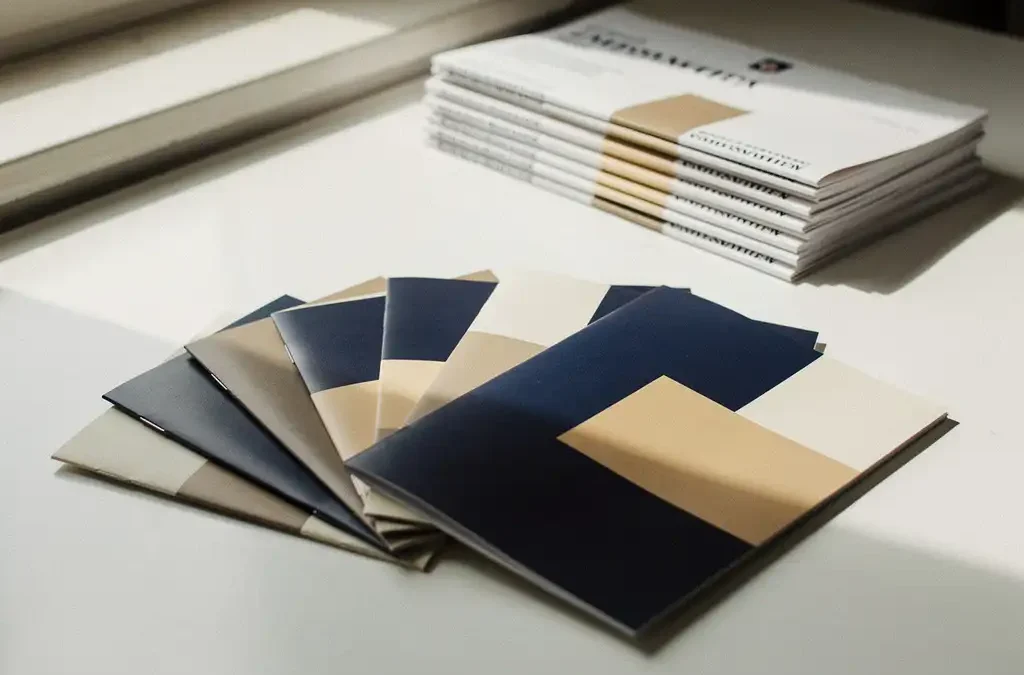
For B2B communications, several types of custom print materials are available, ranging from brochures and product catalogs to technical manuals, point-of-sale materials, and large-format trade show displays. The right choice depends on your target audience, the message you want to convey, and the markets in which you operate. If you’re not sure where to start, feel free to get in touch and we’ll be happy to help. In this article, we answer the most frequently asked questions about custom print materials for B2B companies.
What types of print materials are suitable for B2B communications?
The most suitable types of print materials for B2B communications are product brochures, technical manuals, catalogs, business cards, presentation folders, trade show materials, and point-of-sale displays. Each type serves a specific function within the customer journey and can contribute to brand experience, information transfer, or sales support.
In a B2B context, documentation plays a particularly important role. Customers make decisions based on technical specifications, product documentation, and marketing materials. Print materials that look professional and are accurate in content build trust in your organization. Think of detailed product catalogs for procurement teams, technical data sheets for engineers, or polished company brochures for C-level decision-makers.
Beyond traditional print, the market also offers large-format applications such as roll-up banners, exhibition walls, and flags. These are especially relevant for companies that regularly participate in trade shows or events. Point-of-sale materials — such as displays and product cards — are particularly useful for B2B companies that sell through retailers or dealers.
What is the difference between offset and digital printing?
The key difference between offset and digital printing lies in print run size and cost per unit. Offset printing is cost-efficient for large print runs and delivers consistently high quality. Digital printing is ideal for short runs, personalized materials, or situations where speed is a priority.
In offset printing, ink layers are applied to paper via a printing plate. Setup costs are higher, but the cost per unit drops significantly as the print run increases. This makes offset printing the standard choice for large batches of technical manuals, catalogs, or marketing brochures.
Digital printing requires no printing plates, allowing you to start immediately and produce small quantities economically. Personalization is also more straightforward: variable data such as names, addresses, or region-specific information can be customized for each individual copy. For B2B companies that need materials in multiple language versions or for specific customer groups, this offers significant advantages.
How do you choose the right paper and finish for business print materials?
The choice of paper and finish largely determines the appearance and durability of your print materials. For business print, you select paper weight and coating based on intended use: heavier paper and a matte or gloss varnish enhance the perception of quality, while a specific finish protects the material against wear.
Paper weight is expressed in grams per square meter (gsm). For flyers and inserts, 90 to 135 gsm is often sufficient, while premium brochures and covers tend to work best at 170 gsm or above. Business cards and folders are typically printed on heavy card stock of 300 gsm or higher.
When it comes to finishes, there are several options that enhance a professional appearance:
- Matte lamination: gives a clean, modern look and feels comfortable to hold
- Gloss lamination: makes colors appear vivid and vibrant — ideal for product photography
- Soft-touch lamination: a velvety surface that conveys a sense of luxury
- UV varnish or spot varnish: highlights specific elements such as logos or headings
- Embossing or foil printing: adds a tactile, premium element to business cards or covers
The right combination of paper and finish depends on your brand identity and the purpose of the material. A technical manual calls for different choices than a trade show handout that needs to grab attention immediately.
What does custom print for B2B companies cost?
The cost of custom print materials for B2B companies varies considerably and depends on the type of product, print run, material choices, and finish. Small digital print runs start at relatively low per-unit costs, while large-scale offset production involves higher setup costs but results in a lower price per copy.
In addition to production costs, preparation and DTP work also play a role. If files are not supplied print-ready, technical preparation will be required. Translation or adaptation for multiple language versions adds costs as well, but can be managed efficiently when translation and printing are handled by the same supplier.
Other factors that influence the price:
- Print run: higher quantities reduce the cost per unit in offset printing
- Format and page count: more pages or a larger format increase material and printing costs
- Finish: lamination, foil printing, or soft-touch add costs but increase perceived value
- Turnaround time: rush orders typically carry a surcharge
- Distribution: storage and shipping to multiple locations or markets are additional factors to consider
A reliable way to keep costs under control is to work with a supplier that integrates translation, DTP, and printing. This eliminates duplicated effort and unnecessary coordination costs between multiple parties.
How do you ensure print materials work across multiple languages and markets?
To make print materials work across multiple languages and markets, you combine professional translation with localization of both text and layout, followed by print-ready preparation for each language version. Translated text rarely matches the length of the original, which has a direct impact on the document’s layout.
This is precisely where many companies run into difficulties: a brochure that fits perfectly on two pages in English may require considerably more space in German or Finnish. A DTP team working closely with translators can incorporate these adjustments directly, ensuring the layout remains consistent and print-ready in every language version.
Localization also goes beyond language. Colors, images, symbols, and even paper formats can vary by market. In some countries A4 is the standard, while other regions use different formats. Cultural sensitivities around imagery and color symbolism are also relevant for B2B materials used internationally.
At our print solutions, we offer an integrated approach in which translation, DTP, and print production seamlessly connect. This shortens turnaround times and reduces the risk of errors.
When is a one-stop supplier for printing and localization the best choice?
A one-stop supplier for printing and localization is the best choice when you produce materials in multiple languages, work with tight deadlines, or want to simplify coordination across multiple vendors. Consolidating translation, DTP, and print production with a single partner shortens turnaround times and reduces the risk of errors.
When a product update occurs, technical manuals, marketing brochures, and packaging copy in multiple languages all need to be updated and printed simultaneously. When each step is handled by a different supplier, coordination risks emerge: files go back and forth, versions become outdated, and deadlines slip. A partner that manages everything under one roof eliminates these bottlenecks.
An integrated supplier also offers greater control over quality and information security. We are certified to ISO 9001 for quality management and ISO 27001 for information security, meaning both your production process and your business data are in reliable hands.
A one-stop approach is particularly valuable for companies in the technology or manufacturing sector that regularly update documentation, operate across multiple international markets, or need storage and distribution solutions for printed materials. Contact us to discuss how we can streamline your printing and localization process.
Frequently Asked Questions
How long does it typically take to produce a custom print project?
Turnaround time depends on the type of product, the print run, and whether translations or DTP work are required. For straightforward digital print orders, you can expect a few business days, while more complex projects involving multiple language versions and offset production typically take two to four weeks. Working with an integrated supplier that combines translation, DTP, and print production can significantly shorten the turnaround time. Plan ahead whenever possible, especially if you need materials for a trade show or product launch.
What are the most common mistakes when submitting print-ready files?
The most common mistakes are insufficient bleed, incorrect color profiles (RGB instead of CMYK), low image resolution, and missing embedded fonts. Images must be at least 300 dpi to print sharply, and text that runs to the edge of the page requires a minimum bleed of 3 mm. Always request a file specification from your printer before submitting files, or make use of a DTP service that handles the technical preparation for you.
Can I have existing print materials reprinted in another language without redesigning them?
Yes, this is certainly possible, but it does require professional DTP adjustments after translation. Translated text is rarely the same length as the original, which means text boxes, page layout, and sometimes image selection will need to be adapted. A DTP specialist working alongside the translator can incorporate these changes directly into the existing design. This preserves the brand identity and house style of the original material while ensuring the final result is fully print-ready in the new language.
How do I store and distribute large quantities of printed materials efficiently?
For B2B companies operating across multiple markets or through multiple sales channels, inventory management and controlled distribution are important considerations. Some print partners offer fulfillment services whereby printed materials are stored and dispatched on demand to sales offices, dealers, or trade shows. This prevents departments from maintaining their own stockpiles of outdated materials and ensures central control over the versions in circulation. Ask your supplier whether they also offer storage and shipping solutions as part of their services.
Is sustainable printing a realistic option for B2B companies, and what does it actually involve?
Sustainable printing is absolutely a viable and increasingly sought-after option in B2B. In practice, it involves choices such as FSC-certified paper, plant-based or water-based inks, and production processes that generate less waste. More and more procurement managers and decision-makers value the sustainability credentials of their suppliers, which means eco-friendly printing can also serve as a commercial differentiator. Ask your print partner about the sustainable options available and whether they hold relevant environmental certifications.
How do I ensure my brand identity stays consistent across all printed materials?
Consistency in brand identity starts with a clearly documented brand style guide that specifies colors (in CMYK and Pantone values), typography, logo usage, and visual language. Make sure this document is available to everyone involved in the production of print materials, including external suppliers and DTP teams. For international projects, it is especially important to assign one central party responsibility for layout review across all language versions, so that any deviations are identified and corrected in a timely manner.
What should I ask a potential print partner before starting a collaboration?
At a minimum, ask about the available printing techniques and minimum print runs, the possibility of integrated translation and DTP, the certifications the partner holds (such as ISO 9001 and ISO 27001), and how revision rounds and quality control are organized. Also ask for reference projects in your industry and about storage and distribution options if you operate across multiple markets. A reliable partner will proactively contribute to your process and offer transparency on costs and turnaround times.
Related Articles
- Can I have my printed manuals distributed directly to my dealers in Europe?
- How do I combine translation, layout, and printing in one efficient process?
- How can I ensure that the brand identity comes through in all my documentation?
- How do I make sure my packaging complies in every country I sell in?
- How do you localise desktop software?