
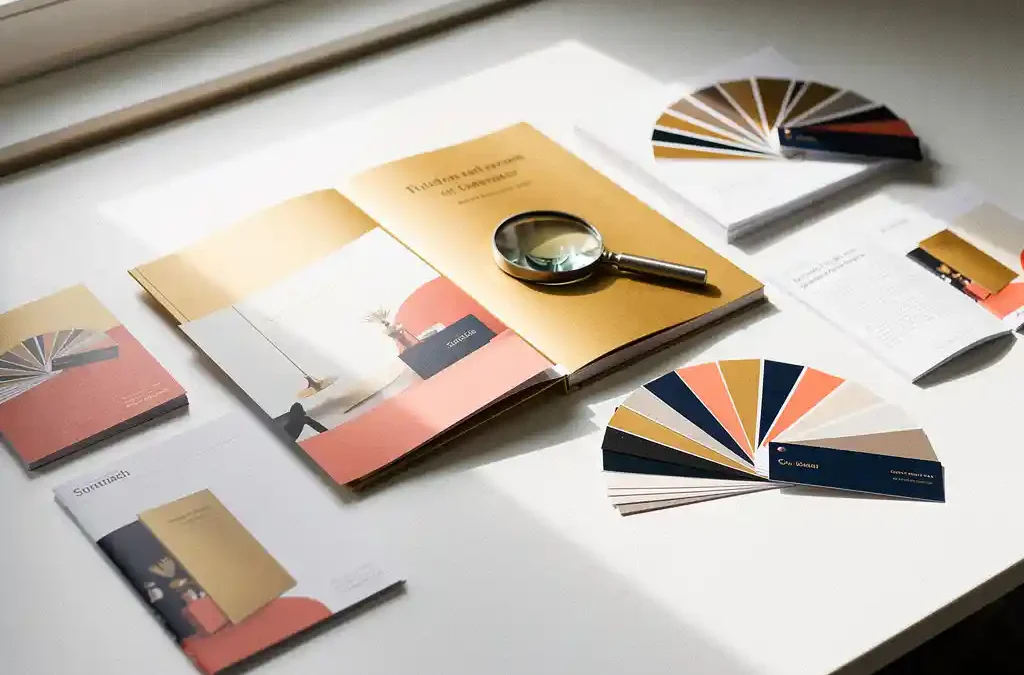
The best printing solution for seasonal promotional materials is digital printing for short, flexible print runs and offset printing for larger volumes where the cost per unit matters. The right choice depends on your print run, lead time, and type of material. In this article, we answer the most frequently asked questions about seasonal print work, from printing techniques and materials to planning and cost savings. Have a specific question? Feel free to get in touch and we’ll be happy to help.
Which printing techniques are suitable for short print runs?
For short print runs, digital printing is the most suitable technique. It requires no expensive printing plates, keeping setup costs low and making it cost-effective to produce even tens or hundreds of copies. Digital printing also enables personalization on a per-item basis, which is ideal for seasonal campaigns where you need multiple variants.
With seasonal promotional materials, print runs are rarely large enough to make offset printing immediately worthwhile. Offset printing only becomes cost-effective from a few thousand copies onward, as setup costs are then spread across a larger number of units. For a summer promotional flyer or a Christmas campaign with a limited run, digital printing is therefore the logical choice.
That said, it’s not always black and white. Hybrid approaches — where a base design is printed offset and variable data is added digitally — can offer the best balance between quality and cost for certain campaigns.
How far in advance should you order seasonal print work?
The general rule for seasonal print work is to place an order at least four to six weeks before the desired delivery date. For more complex projects involving multiple languages, special finishes, or large print runs, that lead time extends to eight to twelve weeks. Starting too late risks rush surcharges or compromises on quality.
Planning actually begins earlier than you might think. Before print work goes to press, designs need to be approved, copy translated or proofread, and files prepared for print production. Each of those steps takes time, and last-minute errors can throw the entire schedule off track.
Practical guidelines by season:
- Christmas and holidays: Start in September or by early October at the latest
- Summer campaigns: Begin planning in March or April
- Spring promotions and Easter: Plan in January or February
- Back-to-school: Take the first steps in May or June
Starting well in advance also leaves room for revisions and unexpected delays in the supply chain.
What are the best materials for outdoor promotions in each season?
The best materials for outdoor promotions vary by season because weather conditions directly affect the lifespan of printed materials. UV-resistant inks, water-repellent coatings, and durable substrates such as PVC banner or coated outdoor paper are essential for materials that will be displayed outside for extended periods.
Summer and spring
In summer, UV resistance is the most important factor. Direct sunlight fades standard inks quickly, causing colors to look washed out after just a few weeks. Choose materials with a UV laminate or use outdoor-resistant banner film. For temporary signage and sidewalk signs, polypropylene or coroplast are good options: lightweight, sturdy, and resistant to rain.
Autumn and winter
In the wet and cold season, moisture resistance is paramount. Paper-based materials without protection peel or tear quickly. Opt for coated or laminated products, and for long-term use consider plastic-based materials. For illuminated shop windows and covered outdoor spaces, backlit films are an attractive option that stands out even in low daylight.
How can you reduce the cost of seasonal print work?
The most effective way to reduce the cost of seasonal print work is to plan smartly, consolidate print runs, and make designs reusable. By building seasonal elements in a modular way, you can reuse a base design and only update the variable parts, saving both print and design time.
Some concrete ways to cut costs:
- Consolidate orders: Print multiple seasonal campaigns at the same time if the designs are already finalized. Larger print runs lower the cost per unit.
- Use standard formats: Non-standard sizes require extra cutting and waste more paper. Standard formats are cheaper to produce.
- Choose the right technique: Digital printing for small runs, offset printing for large volumes. The wrong choice makes a project unnecessarily expensive.
- Avoid rush surcharges: Ordering well in advance prevents additional costs for express production or delivery.
- Design reusable elements: Think of a base frame that is filled with a different color or image each season, without rebuilding the entire design from scratch.
Working with a partner that offers printing, DTP, and translation under one roof also eliminates coordination costs between separate suppliers, saving both time and money.
When is a one-stop print partner the better choice?
A one-stop print partner is the better choice when your campaigns span multiple languages, formats, or channels, and when speed and consistency are critical. By consolidating translation, DTP, print preparation, and production with a single partner, you reduce the risk of errors and delays that arise when multiple suppliers have to wait on one another.
Seasonal campaigns naturally operate on tight timelines. A Christmas campaign that arrives two weeks late misses its purpose entirely. When a translator, DTP specialist, and printer each have to wait for the previous link in the chain, delays compound. An integrated partner works in parallel and communicates internally, significantly shortening lead times.
At Crestec Europe, we combine translation, DTP, and print production in one streamlined process, supported by ISO 9001-certified quality management. That means not only faster turnaround, but also that files are always prepared correctly for print — without you as the client having to oversee the technical coordination.
A one-stop partner is also advantageous when you are rolling out materials across multiple countries or languages. Consistent branding, accurate translations, and on-time delivery per market are much easier to guarantee when a single partner oversees the whole process. Ready to plan your next seasonal campaign? Request a quote and we’ll be glad to think it through with you.
Frequently Asked Questions
Can I reuse seasonal print materials for the following year?
It depends on how timeless the design is. Materials without specific years, date-bound offers, or temporary slogans are often perfectly reusable. Always save files in editable formats (such as InDesign or Illustrator) so you can easily update copy or colors without rebuilding the entire design. A modular design system — where only season-specific elements are swapped out — makes reuse even simpler and more cost-effective.
What are common mistakes when submitting files for seasonal print work?
The most common mistakes are insufficient bleed, incorrect color profiles (RGB instead of CMYK), and fonts that have not been supplied or embedded. These errors only come to light during print preparation and can cause costly delays, especially when the timeline is already tight. Always ask your print partner for file specifications before you start designing, so your files are print-ready from the outset.
How do I ensure color consistency when printing materials in multiple countries?
Color consistency starts with recording exact Pantone or CMYK values in a brand guidelines document, so every printer works from the same reference. Ideally, approve proofs before the full print run is produced, and where possible work with one central print partner serving all markets. If you do work with multiple printers, calibrated color profiles and clear color specifications in the submission brief are essential.
Is sustainable printing an option for seasonal promotional materials?
Absolutely. Sustainable options include FSC-certified paper, vegetable-based inks, and water-based coatings that are less harmful to the environment. For outdoor materials that are only used for a short period, it is also worth exploring recyclable or biodegradable substrates. Discuss your sustainability goals with your print partner upfront, so the choice of materials aligns with the desired quality and budget.
What if my seasonal campaign covers multiple languages — how do I handle that efficiently?
Start by finalizing the source copy before translations begin, as changes after the translation phase mean double the work. Account for text space in your design: some languages, such as German or French, are on average 20–30% longer than English or Dutch source text. Working with a partner that combines translation and DTP prevents translated text from no longer fitting the layout template and eliminates coordination between separate suppliers.
How do I determine the right print run for my seasonal campaign?
Base your print run on historical distribution data from previous campaigns, the number of points of sale or distribution points, and a small buffer of 5–10% for reorders or unforeseen additional distribution. Keep in mind that a reorder with digital printing is relatively straightforward, but with offset printing the fixed setup costs mean it can quickly become more expensive than simply ordering a slightly larger run to begin with. Discuss the tipping point between digital and offset with your print partner to make the most cost-effective choice.
Which finish works best for seasonal print work that needs a premium look?
For a premium feel, soft-touch laminate, spot UV varnish, and foil stamping are popular choices that instantly give materials a luxurious appearance. Soft-touch laminate provides a velvety feel and is well suited for brochures, menu cards, and seasonal catalogs. Spot UV varnish makes specific elements — such as a logo or seasonal image — stand out against the rest of the design, which is visually striking for holiday and luxury promotions. Discuss the options early in the design process, as some finishes require additional lead time.
Related Articles
- What is the difference between transcreation and translation when adapting marketing materials?
- Can I have my logo and corporate identity printed on promotional gifts and office supplies?
- How do I distribute printed product manuals to dealers across Europe?
- What's the difference between a user manual, service manual and installation guide?
- How do you manage multilingual documentation?