 Securing your data when outsourcing print work starts with choosing a partner who demonstrably meets recognized security standards, such as ISO 27001, and is willing to sign a data processing agreement. Confidential files, brand guidelines, and customer data you share...
 The ISO standards most relevant to print quality are ISO 12647 (for color reproduction and printing processes), ISO 9001 (for quality management systems), and ISO 27001 (for information security). Which standard carries the most weight depends on the type of print...
 The difference between transcreation and translation in marketing print materials lies in the degree of creative freedom. Translation converts a source text into another language as accurately as possible. Transcreation completely rewrites the message from the ground...
 You can protect confidential product information when outsourcing print work by partnering with a print provider that operates under a signed non-disclosure agreement, guarantees secure file transfer, and holds verifiable information security certifications. The...
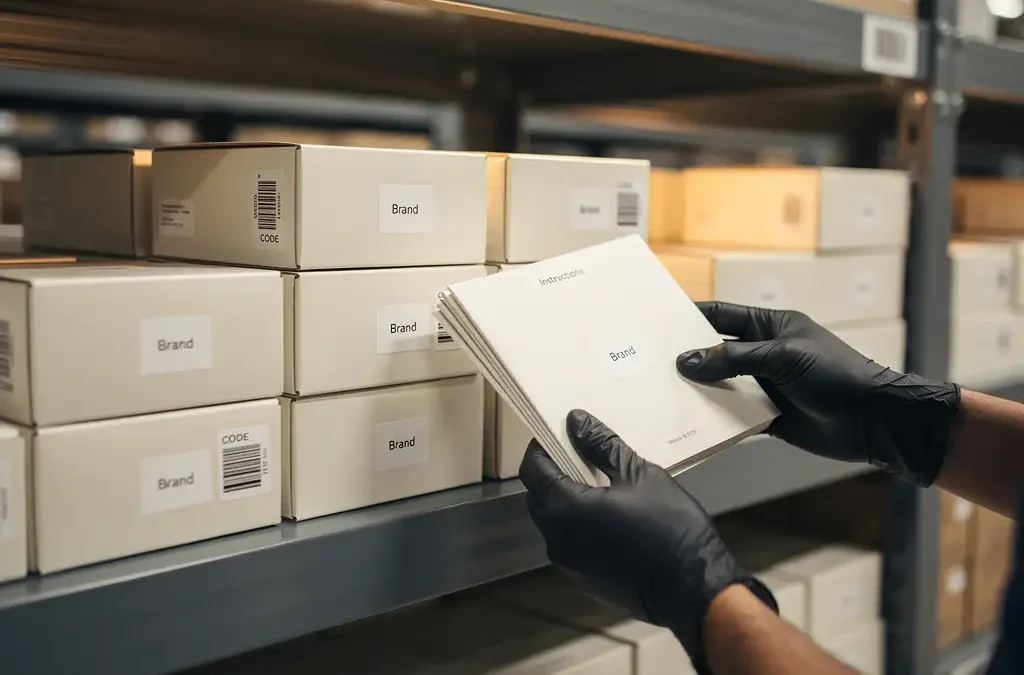 Warehousing, kitting, and print production work together as an integrated documentation pipeline: printed materials are produced, stored in a warehouse, assembled into kits based on specific requirements, and then shipped to their final destination. This is...