
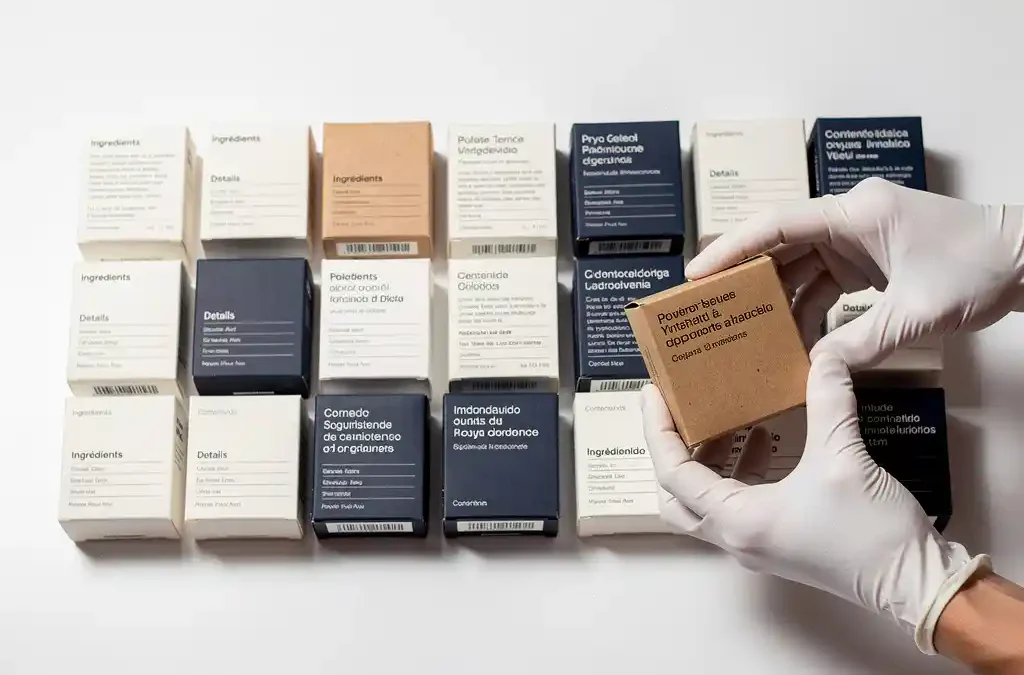
To make sure your packaging complies in every country you sell in, you need to research and meet each market’s specific labeling, language, safety, and regulatory requirements before you launch. Compliance is not a one-size-fits-all exercise — rules vary significantly by product category, region, and even distribution channel. Our translation and localisation services help you navigate this complexity by ensuring your packaging communicates accurately and appropriately in every target market.
What packaging requirements differ from country to country?
Packaging requirements that differ by country include mandatory languages, ingredient or material disclosures, safety warnings, recycling symbols, unit measurements, and regulatory body approvals. Some markets require specific certifications or marks on the packaging itself, while others mandate particular font sizes or label placements. The type of product you sell — food, electronics, cosmetics, pharmaceuticals — heavily determines which rules apply.
For example, food products sold in the European Union must display allergen information in a specific format, while the same product sold in the United States must comply with FDA labeling standards, which differ in structure and required content. In Japan, packaging often requires Japanese-language instructions and specific safety symbols. In Brazil, Portuguese is mandatory, and INMETRO certification marks may be required for certain product categories.
Beyond language, measurements matter too. Countries using the metric system require different unit labeling than those using imperial measurements. Electrical products need country-specific voltage and safety marks. Understanding these layers of difference is the first step toward building a compliant packaging strategy.
Which countries have the strictest packaging regulations?
The countries with the strictest packaging regulations include Germany, France, Japan, the United States, and Australia. These markets combine detailed language requirements, mandatory safety certifications, environmental labeling obligations, and product-specific disclosure rules that together create a high compliance burden for international sellers.
Germany, for instance, enforces rigorous recycling and waste management obligations under its packaging law (Verpackungsgesetz), requiring companies to register and participate in a dual system. France has its own extended producer responsibility rules and mandatory French-language labeling. Japan requires Japanese-language product information by law across many product categories, with precise formatting standards for food and cosmetics.
In the United States, the Federal Trade Commission and the FDA each govern different product categories with distinct labeling rules. Australia and New Zealand operate a joint food standards code that mandates specific nutritional labeling formats. If you are entering any of these markets, treat compliance as a project in its own right, not an afterthought.
How does multilingual labeling work for international packaging?
Multilingual labeling means including required product information in more than one language on the same packaging, either by printing all languages on a single label or by using supplementary labels, booklets, or inserts. The approach you choose depends on the number of target markets, available label space, and whether your product requires identical regulatory text in each language.
In the European Union, many manufacturers use a single multilingual label that covers all required EU languages, which can be efficient but demands careful space planning and accurate translation. In other regions, a sticker overlay or separate insert is common when entering a new market without reprinting the full packaging run.
Whatever method you use, the quality of the translation is critical. A mistranslated warning, incorrect dosage instruction, or poorly rendered safety symbol can create liability and undermine consumer trust. Working with professional translators who specialize in your product category ensures that the content is not only linguistically correct but also formatted to meet local regulatory standards.
What’s the difference between translation and localization for packaging?
Translation converts text from one language to another, while localisation adapts the entire packaging experience for a specific market, including language, cultural references, regulatory terminology, visual conventions, and tone. For packaging compliance, you almost always need both — translation alone is rarely sufficient to meet local expectations or legal requirements.
Consider a product sold across Europe and the Middle East. Translation handles the linguistic conversion of your ingredient list or usage instructions. Localisation goes further: it ensures that the date format matches local convention, that culturally sensitive imagery is adjusted, that the tone of safety warnings aligns with local regulatory phrasing, and that units of measurement are correct for that market.
For packaging specifically, localisation also covers design decisions. Colours carry different meanings across cultures, and a layout that works well in left-to-right languages needs restructuring for Arabic or Hebrew. Ignoring localisation in favour of literal translation is one of the most common and costly compliance mistakes international brands make.
Should I use a language service provider or handle packaging compliance in-house?
For most businesses selling in multiple countries, working with a language service provider (LSP) is more reliable and cost-effective than handling packaging compliance in-house. In-house teams rarely have the depth of linguistic expertise, regulatory knowledge, and quality assurance processes that a specialist LSP brings, particularly when you are managing content in ten or more languages simultaneously.
An experienced LSP brings native translators for each target language, subject-matter expertise in your product category, and established workflows for regulatory review. This matters because packaging errors are expensive: reprinting labels, recalling products, or facing regulatory penalties far outweigh the cost of professional localisation from the outset.
That said, in-house teams can play a valuable role in managing the process, briefing the LSP, and maintaining brand consistency. The most effective approach is a partnership: your team owns the brand and product knowledge, while the LSP owns linguistic accuracy and regulatory adaptation. We work this way with clients across technology, manufacturing, and consumer goods, integrating translation, DTP, and print-ready file production into a single streamlined workflow.
How do I keep my packaging compliant as regulations change?
Keeping your packaging compliant as regulations change requires a proactive monitoring process, a clear internal ownership structure, and a reliable localisation partner who can turn around updates quickly. Regulations in major markets are revised regularly, and in 2026 several jurisdictions are updating sustainability and recycling labeling requirements, making ongoing compliance management more important than ever.
Start by assigning clear responsibility for regulatory monitoring in each of your key markets, whether that sits with your legal team, a regulatory consultant, or your distribution partner in that country. Set a review cadence for your packaging content, at minimum annually, and after any known regulatory update in your sector.
Build your packaging files in a way that makes updates straightforward. Using editable source files and maintaining a translation memory with your LSP means that when a regulation changes, you only need to update the affected content rather than starting from scratch. A good localisation partner will flag relevant changes proactively and help you assess their impact on your existing packaging across all languages.
Compliance is an ongoing commitment, not a one-time project. If you want to make the process simpler and more reliable, we are here to help. Request a quote for your packaging localisation needs, or contact us to talk through your specific markets and requirements.
Frequently Asked Questions
How early in the product development process should I start thinking about packaging compliance?
Packaging compliance should be factored in during the product design phase, not after manufacturing has begun. Waiting until you are ready to launch means costly redesigns, label reprints, or delayed market entry. Ideally, brief your localisation partner at the same time you brief your packaging designer, so that label space, language requirements, and regulatory content are built into the design from the start rather than retrofitted later.
What happens if my product packaging is found to be non-compliant after it has already reached the market?
The consequences of non-compliant packaging vary by country and severity, but can include product recalls, fines, import bans, or forced withdrawal from sale. Beyond the financial penalties, non-compliance can damage your brand reputation and erode retailer confidence. Acting quickly — updating labels, issuing corrected versions, and communicating transparently with distributors and regulators — is essential to limiting the impact.
Do e-commerce products sold internationally need the same packaging compliance as retail products?
Yes, in most cases e-commerce products must meet the same packaging and labeling requirements as those sold through physical retail channels, because compliance obligations are typically tied to where the consumer is located, not how the product is sold. Some markets, such as the EU, are actively tightening e-commerce regulations to close gaps that previously allowed online sellers to bypass local labeling rules. If you are shipping directly to consumers in a foreign country, assume the same compliance standards apply.
How do I manage packaging compliance across a large product range with many SKUs?
Managing compliance across a large SKU range requires a centralised content management approach, where all packaging text is stored in a structured, language-agnostic format that can be updated and localised at scale. Working with a localisation partner who uses translation memory technology means that repeated content — such as standard safety warnings or brand boilerplate — is translated once and reused consistently, significantly reducing both cost and turnaround time. Prioritise building a master content library early, as this becomes your single source of truth when regulations change or new markets are added.
Are there international packaging standards that apply across multiple countries at once?
Some regional frameworks do create shared standards across member states — the EU’s food labeling regulations, for example, apply across all 27 member countries, and the Australia–New Zealand joint food standards code covers both markets simultaneously. However, even within these frameworks, individual countries can impose additional requirements on top of the baseline. There is no single global packaging standard, which is why a market-by-market compliance review remains essential even when regional frameworks appear to simplify the process.
What is the most common packaging compliance mistake international brands make?
The most common mistake is treating translation as the finish line, when localisation is actually the goal. Brands often translate their existing packaging text word-for-word without adapting regulatory phrasing, measurement units, date formats, or culturally specific content to meet local expectations and legal requirements. This approach frequently results in packaging that is linguistically intelligible but legally non-compliant or commercially ineffective in the target market. Investing in proper localisation from the outset is consistently less expensive than correcting errors after launch.
How long does the packaging localisation process typically take, and how can I speed it up?
Timelines vary depending on the number of languages, the complexity of the product category, and how complete your source content is, but a realistic range for a multi-market packaging localisation project is two to six weeks from briefing to print-ready files. You can significantly reduce this timeline by providing clean, editable source files, a clear brief on target markets and regulatory requirements, and approved reference materials such as glossaries or previous translations. Establishing an ongoing relationship with your LSP — rather than briefing them fresh each time — also accelerates turnaround, as they will already understand your brand, terminology, and workflow.
Related Articles
- How does warehousing and kitting work together with my printed materials?
- What are the environmental certifications I should look for when choosing a printing partner?
- What are the options for custom print materials for my B2B communications?
- What is the difference between digital printing and offset printing for large print runs?
- Should I write my own technical manual or hire someone?