
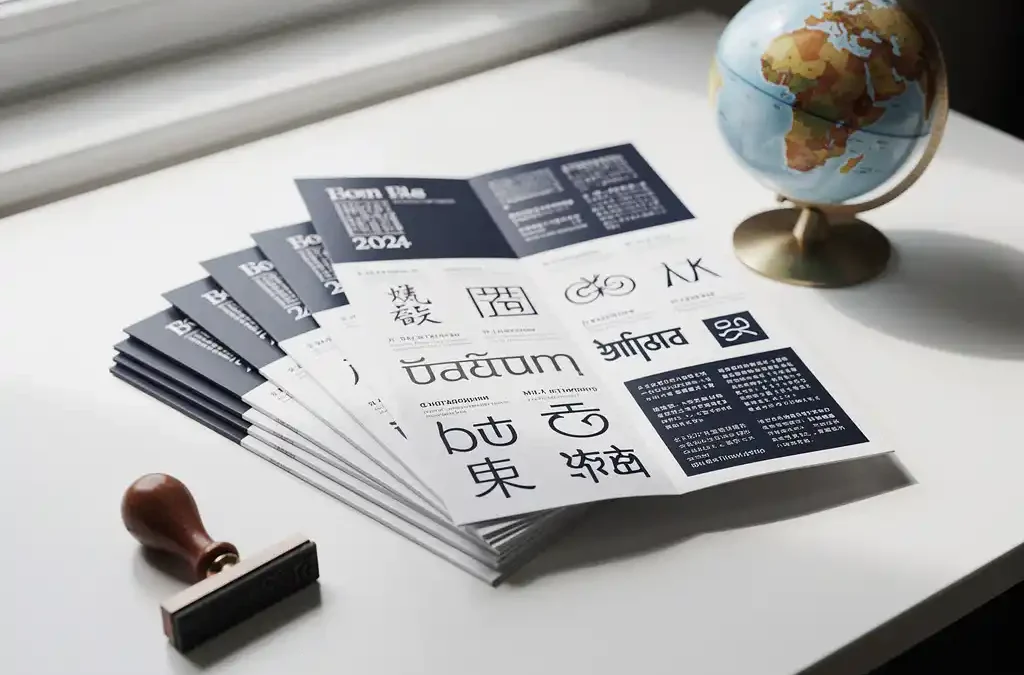
The choice between a local printer and an international print partner depends on the scale, complexity, and geographic reach of your printing needs. For simple, small-scale jobs, a local printer is often perfectly adequate. However, once you start combining multiple languages, markets, or large volumes, an international print partner offers structural advantages that make collaboration simpler and more efficient. In this article, we answer the most frequently asked questions so you can make an informed decision. Do you already have a specific job in mind? Feel free to get in touch — we’d be happy to think it through with you.
What are the key differences between a local printer and an international print partner?
A local printer typically focuses on a single market, works with a limited range of languages, and operates within a regional network. An international print partner operates globally, offers multilingual support, and integrates processes such as translation, layout, and printing under one roof. The biggest difference lies in the scope and degree of process integration.
A local printer knows their region well and can respond quickly for jobs within that market. But as soon as documentation needs to reach multiple countries, coordination and consistency become a challenge. An international print partner has the infrastructure to handle large volumes, maintain quality across multiple markets, and work with standardized processes that reduce errors.
Certification also plays a role. Partners holding ISO 9001 and ISO 27001 certifications provide demonstrable guarantees in the areas of quality management and information security. This is particularly relevant when working with sensitive product documentation or customer-facing communications materials.
When is a local printer the better choice?
A local printer is the better choice when you have a one-off job for a single market, volumes are limited, and speed or personal contact are the deciding factors. For small businesses or local campaigns where no translation or international distribution is required, a local printer offers a pragmatic and cost-effective solution.
Think of a regional event where you quickly need flyers or banners, or an internal document that only needs to be available in one language. In those cases, the proximity of a local printer is an advantage: short communication lines, quick proofs, and a personal relationship.
Even if you already have an established supplier relationship and quality is consistent, it can make sense to stick with a local partner for specific jobs. The key is that the choice fits the scale and complexity of what you need.
When is an international print partner the preferred option?
An international print partner is the preferred option when you need documentation in multiple languages, want to produce large volumes, or need to distribute materials across different countries. The advantages are greatest when translation, layout, and printing need to align closely and consistency across markets is essential.
Imagine launching a product in ten European countries. You don’t just need print materials — you also need translations into multiple languages, adapted layouts for each market, and reliable distribution to dealers or end users. An international partner who integrates all these steps prevents you from having to coordinate with multiple suppliers and risking inconsistencies in branding or content.
Our print solutions are designed precisely for these kinds of situations: from offset and digital printing to fulfillment and inventory management, all seamlessly connected with translation and DTP.
How do cost and lead time influence the choice?
Cost and lead time are two of the most decisive factors when choosing a print partner. Local printers are often faster for small jobs, but can work out more expensive for large volumes. International print partners offer economies of scale for larger print runs, but sometimes require longer lead times for complex multilingual projects.
It’s tempting to focus solely on the unit price, but the total cost picture is broader. Consider the time spent coordinating between multiple suppliers, the risk of errors caused by miscommunication, and the cost of reprints when something goes wrong. An integrated partner who combines translation, layout, and printing may appear more expensive at first glance, but in practice saves both time and money.
For urgent jobs with limited scope, a local printer is often the fastest route. For recurring, structural print projects across multiple markets, it pays to invest in a partnership where processes are streamlined and lead times become predictable.
What role does localization play in choosing a print partner?
Localization plays a crucial role when your print materials are intended for multiple markets or language groups. It’s not just about translation — it also involves adjustments to layout, color usage, paper formats, and cultural nuances that can vary from country to country. A print partner who understands localization delivers materials that truly resonate with the local audience.
A local printer typically has no localization expertise and will refer you to external translators or copywriters. This increases the risk of inconsistencies and extends lead times. An international print partner with in-house localization capabilities can manage the entire chain: from source text to localized final product, ready for distribution.
Localization is also relevant for point-of-sale materials, product documentation, and marketing communications where the message needs to be tailored slightly differently for each market. The more markets you serve, the greater the added value of a partner for whom localization is a core competency.
What should you look for when evaluating a print partner?
When evaluating a print partner, you should look at quality certifications, the breadth of services offered, the degree of process integration, and experience within your sector. A partner who only handles printing but not translation or layout requires more coordination on your part and increases the risk of errors.
Concrete criteria to evaluate include:
- Certifications: ISO 9001 confirms structured quality management; ISO 27001 ensures that your documentation and business data are handled securely.
- Service offering: Can the partner deliver translation, DTP, printing, and distribution under one roof?
- Language capacity: How many languages are supported, and how is quality managed for each language?
- Industry experience: Does the partner have demonstrable experience in your industry, such as technology or manufacturing?
- Scalability: Can the partner handle both small and large volumes, and respond flexibly to peaks in demand?
- Transparency: Are lead times, pricing structures, and responsibilities clearly defined?
A print partner who combines all of these aspects is not just a supplier but a strategic partner who contributes to the quality of your customer communications. Want to find out how we can support your print projects? Request a quote and we’ll be happy to discuss the possibilities.
Frequently Asked Questions
How do I get started with switching from a local printer to an international print partner?
Start by taking stock of your current print projects: how many languages, markets, and volumes are involved? Then map out which steps you currently coordinate yourself — such as translation, layout, and distribution — and what costs and risks are associated with them. With that information, you can request a targeted quote from an international print partner to concretely compare the added value against your current situation.
What are the most common mistakes when choosing a print partner?
A common mistake is focusing exclusively on the unit price, without factoring in the hidden costs of coordination, reprints, and miscommunication. Another pitfall is choosing a partner without relevant industry experience or certifications, which creates quality and security risks when handling sensitive documents. Finally, businesses often underestimate the importance of scalability: a partner who works well for small volumes today may fall short when you grow or expand internationally.
Can an international print partner handle small or rush jobs?
Yes, many international print partners have processes in place for smaller or urgent jobs alongside their large-volume capacity — especially if you already have an established relationship. Through standardized workflows and digital printing options, shorter print runs can be turned around quickly. It’s wise to agree on concrete lead times and minimum volumes when entering into a partnership, so you know exactly what to expect.
How is the quality of translations and layout ensured at an international print partner?
A reliable international print partner works with certified translators, internal review processes, and DTP specialists who are familiar with the visual requirements of each market. Quality assurance is ideally embedded in an ISO 9001-certified process, where every step — from source text to print-ready file — is checked. When evaluating a partner, always ask about their specific quality process and whether they have experience with your type of documentation, such as technical manuals or marketing materials.
Is my business documentation safe with an international print partner?
Information security is a legitimate concern, especially when dealing with sensitive product documentation, contracts, or confidential marketing materials. Choose a partner with ISO 27001 certification, which demonstrates that they operate a structured information security management system. Also ask about their policies on data storage, access control, and non-disclosure agreements (NDAs) to ensure your documents are properly protected.
What is the difference between translation and localization, and why does it matter for print?
Translation involves converting text from one language to another, while localization also takes into account cultural context, tone of voice, paper formats, color conventions, and market-specific regulations. In print, an incorrect paper format or a culturally sensitive color choice can significantly undermine the effectiveness of your materials. For companies operating in multiple countries, localization is therefore not a luxury but a necessity to ensure the message truly resonates with the local audience.
Can I use a hybrid approach, working with both a local printer and an international print partner?
Absolutely — a hybrid approach can make sense if you have both local rush jobs and international structural projects. You can use a local printer for regional campaigns or internal documents, while an international print partner manages the multilingual and large-scale projects. Just make sure your branding and style guidelines are centrally documented, so that both parties consistently apply the same corporate identity and quality remains uniform across all channels.
Related Articles
- Can I have print work combined with translation and localization in a single order?
- What are the requirements for printed materials at trade shows and events?
- How do I manage stock of printed product information in different languages?
- How do you localise mobile applications effectively?
- How do internationalisation and localisation work together?