
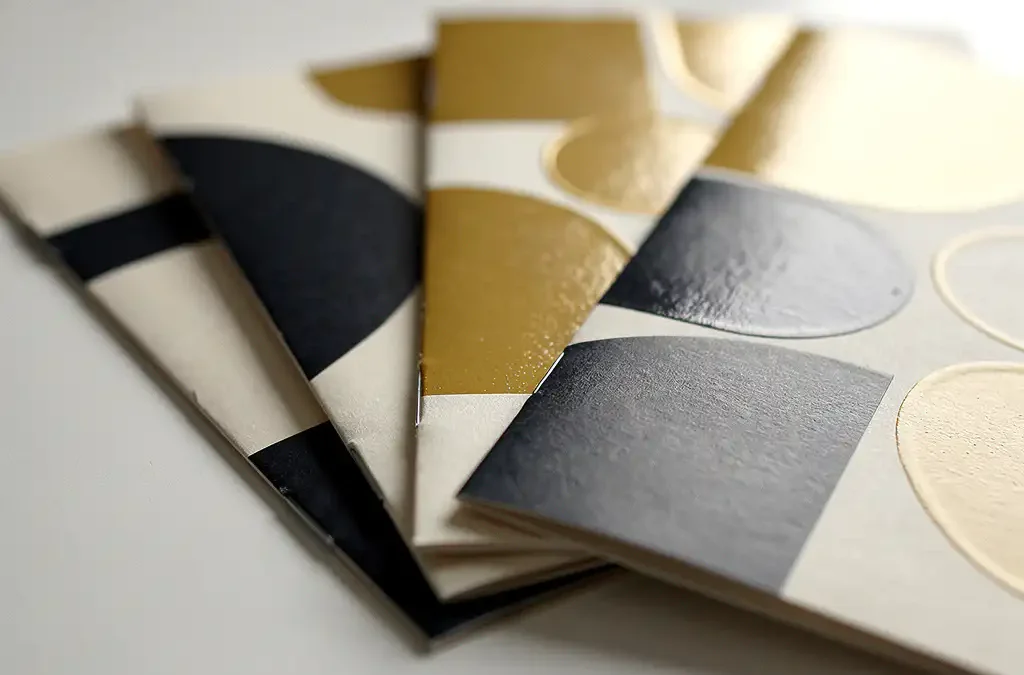
Choosing the right finish for printed marketing materials depends on the purpose of the material, the target audience, and the desired look and feel. Glossy finishes enhance vibrant images and draw attention, while matte finishes convey a professional, premium impression. Need help making the right choice? Feel free to contact us and we’ll be happy to assist. In this article, we answer the most frequently asked questions about print finishing, so you know exactly what you need.
What types of finishing are available for printed materials?
The most common finishing options for print are laminating, varnishing, embossing, foil printing, and die-cutting. Each technique produces a different visual and tactile effect on your printed material. The choice depends on the type of material, the budget, and the effect you want to achieve.
Below is an overview of the most widely used finishing techniques:
- Laminating: a thin plastic film applied over the printed surface, available in matte or gloss
- Varnishing: a transparent coating that provides protection and enhances appearance, available as dispersion, UV, or spot varnish
- Embossing: a technique in which a pattern or text is physically pressed into or raised from the paper
- Foil printing: a shiny, metallic layer selectively applied for a luxurious effect
- Die-cutting: cutting printed materials into a specific shape that differs from the standard rectangle
The finish you choose determines not only the appearance but also the durability of the material. A laminated brochure, for example, lasts longer than an uncoated one — especially when the material is handled or carried frequently.
What is the difference between laminating and varnishing?
Laminating adds a physical plastic film to the printed piece, while varnishing applies a liquid protective coating printed directly onto the ink. Laminating offers greater protection and a sturdier feel; varnishing is more subtle, faster to apply, and offers more options for spot effects.
Laminating is ideal when you need the material to withstand wear, moisture, and frequent handling. Think of menu cards, product catalogs, or presentation folders. It also gives the printed piece a clearly noticeable tactile difference: laminated paper feels thicker and more substantial.
Varnishing is a lighter treatment, more commonly used for aesthetic purposes. Spot UV varnish is a popular choice: only part of the surface is coated — such as a logo or image — creating a striking contrast with the rest of the material. This delivers a refined, premium effect without the full cost of laminating.
When should you choose matte, and when should you choose gloss?
Choose a matte finish when readability and a premium look are the priority, and a gloss finish when you want colors to pop and visual impact is the goal. Matte works well for text-heavy materials; gloss enhances photographs and graphic elements.
A matte finish absorbs light rather than reflecting it. This makes text easier to read and gives the material a calm, elegant appearance. Matte brochures and business cards are often associated with quality and professionalism, making them a great fit for sectors such as finance, legal services, or high-end products.
A gloss finish reflects light and makes colors appear more intense and vivid. This makes it particularly well suited to materials where visual appeal is the main focus, such as product photo folders, posters, or event promotional materials. The downside of gloss is that fingerprints show more easily and it can produce distracting reflections in bright light.
Which finish suits which marketing material?
The finish should match the intended use and message of the material. Business cards benefit from laminating or foil printing for a premium feel; brochures are often matte laminated for readability; posters and displays go for gloss to attract attention.
Here is a practical overview by type of marketing material:
- Business cards: matte or gloss laminate, or spot UV varnish for a distinctive effect
- Brochures and catalogs: matte laminate for text-heavy content, gloss for image-rich versions
- Posters and banners: gloss for maximum color intensity and visibility
- Packaging and boxes: embossing or foil printing for a premium product presentation
- Promotional materials and flyers: dispersion or UV varnish for quick protection on high print runs
- Trade show materials and displays: gloss or spot varnish for visual impact on the show floor
With our print solutions, we always tailor the finish to the specific purpose of the material, ensuring the end result meets expectations both visually and functionally.
How does finishing affect the cost of printing?
Finishing increases the cost of printing, but the extent varies significantly by technique. Simple finishes such as dispersion varnish add little to the price; more complex techniques such as foil printing, embossing, or die-cutting can increase costs considerably. Print run size also plays a major role.
With larger print runs, the fixed costs for tooling and setup are spread across more copies, bringing the unit price down. This makes more complex finishes relatively more affordable at higher quantities. For small runs or print-on-demand, it is often wiser to opt for simpler finishes that still deliver a professional look.
Spot UV varnish is a popular choice for those who want a premium look while keeping costs manageable. It delivers a striking effect without the high price tag of foil printing or embossing. Always discuss the appropriate finish for your budget and objectives upfront, so there are no surprises when the quote arrives.
Should you always discuss finishing with your print provider?
Yes, it is strongly recommended to always discuss your desired finish with your print provider in advance. Not every finish is compatible with every paper type, ink type, or design. A good print partner thinks proactively and helps you avoid costly mistakes or disappointing results.
Some finishes require specific preparation in the design. For spot UV varnish, for example, the design must include a separate spot color layer indicating which areas will be coated. For embossing, a custom die must be produced in advance. If these technical details are not correct, the final result may not match expectations.
A print partner that also offers DTP support can help prepare your files correctly. This makes the transition from design to print smoother and helps you avoid delays. We work with an in-house DTP team that collaborates closely with our print partners across Europe and beyond, ensuring that technical preparation and production align seamlessly.
Want to know which finish is best suited to your specific print job or marketing materials? Contact us and we’ll be happy to help you find the best solution for your project.
Frequently Asked Questions
Can I combine multiple finishing techniques on a single print job?
Yes, combining finishing techniques is certainly possible and often produces a striking result. For example, you can pair a matte laminated brochure with spot UV varnish on the logo for an elegant contrast. It is important to discuss this with your print provider in advance, as not all combinations are technically feasible and costs can add up quickly.
Which finish is the most sustainable and eco-friendly?
Dispersion varnish is generally the most eco-friendly finishing option, as it is water-based and keeps paper more easily recyclable than laminating. Laminating makes paper harder to recycle because the plastic film is difficult to separate from the paper. If sustainability is a priority for your brand, discuss with your print provider which options are available using FSC-certified materials and eco-friendly inks.
How do I make sure my design is ready for a specific finish?
File preparation depends heavily on the chosen finish. For spot UV varnish or foil printing, your design needs a separate spot color layer that precisely indicates which elements will be treated. For embossing, a technical drawing of the die is required. Always request the technical specifications from your print provider before finalizing your file, or use a DTP service to handle this for you.
Is finishing suitable for small print runs or print-on-demand?
Some finishes are better suited to small print runs than others. Dispersion and UV varnish are relatively accessible for smaller runs, while foil printing and embossing involve higher setup times and tooling costs that only become cost-effective at larger quantities. For small runs, matte or gloss laminating is often the best balance between quality and cost control.
What are common mistakes when choosing a finish?
A common mistake is choosing a gloss finish for text-heavy materials, where reflections reduce readability. Another pitfall is failing to match the finish to the paper type, which can lead to poor adhesion or an undesirable end result. Finally, many clients underestimate the lead time for more complex finishes such as embossing or die-cutting — always factor in extra time for these.
How long does the production process take for printed materials with special finishing?
Lead time depends on the complexity of the chosen finish. Standard laminating or varnishing typically adds one to two business days to the production time. More complex techniques such as foil printing, embossing, or die-cutting require additional tooling and preparation, which can extend the lead time by several business days. Always discuss your desired delivery date with your print provider early on so that sufficient time can be scheduled.
Can finishing be added to existing printed materials after the fact?
In some cases it is possible to apply a finish to already printed material after the fact — laminating, for example. However, techniques such as spot UV varnish, foil printing, or embossing must always be incorporated into the production process and cannot be applied afterward without reprinting the material. It is therefore essential to determine the desired finish during the design phase to avoid additional costs and delays.
Related Articles
- How do I quickly process product changes across all my printed documentation?
- Who can translate, format, print, and distribute my manuals?
- My printed materials need to be FSC- and EUDR-compliant — who can handle that? The Netherlands? Germany? Europe?
- What legal considerations exist for software localisation?
- How do you localise enterprise software?