
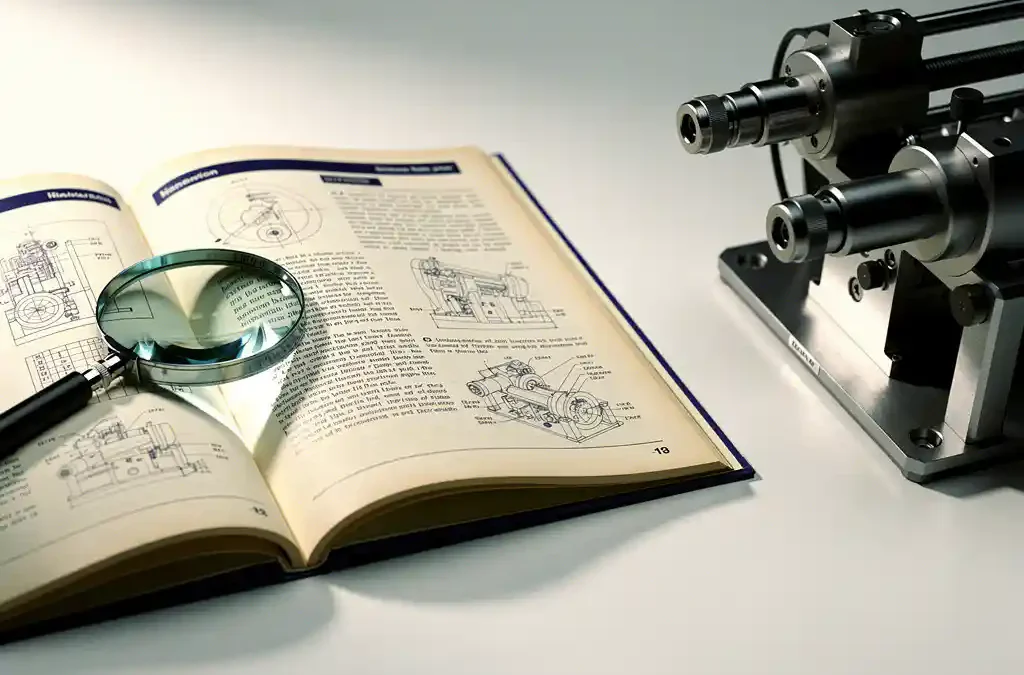
Printed manuals offer a tangible, always-available source of information that requires no power, internet connection, or device. For companies supplying products to diverse audiences, print provides a reliable way to guide users regardless of their technical skills or environment. In this article, we answer the most frequently asked questions about the benefits of printing manuals. Have questions about our approach? Feel free to get in touch.
Why do companies still choose printed manuals?
Companies choose printed manuals because they are universally accessible, require no technology, and give a product a professional appearance. Print gives users a tangible document they can keep, annotate, and refer to without relying on digital tools. This makes printed manuals particularly valuable in environments where screens are impractical.
Think of a technician in a machine room, an end user setting up a device for the first time, or a customer unboxing a product in a store. In all these situations, a printed manual is immediately available and easy to use. Moreover, a high-quality manual strengthens customer confidence in both the brand and the product. Documentation is not just informative — it is also part of the overall customer experience.
What are the advantages of printed manuals over digital ones?
Printed manuals are always available, require no device or internet connection, and are easier to follow during hands-on tasks. Digital versions are more flexible to update, but printed versions score higher on readability in practical situations, familiarity, and ease of use for people who are less digitally confident.
The two formats are not mutually exclusive. Many companies opt for a combination: a printed quick-start manual included with the product and a more comprehensive digital version available online. That said, print remains indispensable for products used in environments where screens are impractical — such as outdoors, in workshops, or in industrial settings. A physical manual also conveys a sense of completeness and care that contributes to the perception of product quality.
Which industries benefit most from printed manuals?
The industries that benefit most from printed manuals include technology, manufacturing, medical devices, consumer electronics, and construction. In these sectors, products are often complex, used in non-digital environments, and clear instructions are essential for safety and correct operation.
In the manufacturing industry, printed documentation for machinery and equipment is a legal requirement in many countries. In the medical sector, manuals must comply with strict regulations and printed versions are frequently mandatory. Even in consumer electronics, a concise printed quick-start guide remains standard in the packaging, as it directly supports the first-time user experience. We work daily with clients across all these sectors and understand how important it is to make the right information available at the right time.
How does print quality affect the user experience?
Print quality has a direct impact on how users experience and evaluate a manual. Sharp printing, legible fonts, sturdy paper, and clear images make a manual not only more pleasant to read, but also more credible and professional. Poor print quality raises doubts about the quality of the product itself.
A well-printed manual communicates care and attention. When colors are accurate, text is crisp, and the layout is logically structured, users follow instructions more quickly and with fewer errors. Our print solutions are always prepared in close collaboration with our in-house DTP team, ensuring documents meet the technical requirements of the print process. Whether it is offset printing for large runs or digital printing for smaller quantities, quality is always guaranteed.
What does it cost to print manuals for businesses?
The cost of printing manuals varies depending on the print run, format, paper weight, color specification, and finishing. Larger print runs are cheaper per unit thanks to the fixed costs of offset printing, while smaller runs are better suited to digital printing. Accurately estimating the quantity needed is the key to cost efficiency.
Beyond the pure printing costs, preparation, DTP, and any translation also play a role in the overall budget. Companies that consolidate all these steps with a single partner save on coordination and avoid delays. We offer an integrated approach in which translation, layout, and printing connect seamlessly, saving both time and money. That way, you always know exactly what to expect — no surprises.
How do you combine translation and printing for international manuals?
For international manuals, you combine translation and printing by integrating both processes into a single workflow, where the translated text is laid out directly for the target market and then prepared for production. This prevents rework, speeds up turnaround time, and ensures consistent quality across all languages.
A common mistake is treating translation and printing as two separate processes. Text in other languages is often longer or shorter than the source text, which affects the layout. When translation and DTP are not aligned, problems arise such as overflowing text or shifting images. We work in more than 90 languages, and our DTP specialists ensure that every translation fits seamlessly within the design, ready for print.
Furthermore, consolidating translation, layout, and printing with a single partner means product updates can be rolled out quickly across all markets. This is a major advantage for companies operating internationally that need to respond swiftly to changes in products or regulations.
Want to learn more about how we can translate, lay out, and print your manuals for international markets? Contact us and we will be happy to discuss the possibilities for your project.
Frequently Asked Questions
How do I determine which paper weight and finish are best suited to my manual?
The choice of paper weight and finish depends on the use case for your manual. A manual used in a workshop or outdoor environment benefits from heavier paper (at least 100 g/m²) and possibly a laminated cover for added durability. For a quick-start guide that will only be consulted once, lighter paper is sufficient. Always discuss the intended use with your print partner so that the choice of materials matches real-world conditions.
What is the minimum print run I should order for a cost-effective print job?
With offset printing, the break-even point for cost efficiency is typically reached at a print run of 500 to 1,000 copies, depending on the format and complexity of the manual. For smaller quantities, digital printing is the better choice, as there are no high setup costs. Do your needs vary by market or language? A hybrid approach — offset printing for large markets and digital for smaller ones — can significantly reduce overall costs.
What should I do if my product is updated and the manual needs to be revised?
Make sure your source files (text, layout, and translations) are always kept organized and up to date, ideally with one partner who manages all the steps. This allows changes to be implemented quickly without having to rebuild the entire document from scratch. If you work with multiple language versions, it is essential that any changes to the source text are immediately applied to all translations and layout files to prevent inconsistencies.
Are there legal requirements that printed manuals must comply with?
Yes, many industries and countries have specific legal requirements for printed manuals. Within the EU, the Machinery Directive (and its successor, the Machinery Regulation) requires manufacturers to include documentation in the language of the country of use. In the medical sector, even stricter requirements apply regarding readability, language versions, and content. It is strongly advisable to account for these requirements during product development and to engage a partner who is familiar with the regulations in your target markets.
How long does it typically take to have a manual printed, including translation and layout?
The turnaround time depends on the size of the manual, the number of languages, and the desired print run, but you should generally allow two to four weeks for a complete process covering translation, DTP, and printing. When translation, layout, and printing are handled by one partner, rework is avoided and the schedule can be kept tighter. For urgent projects, expedited timelines are often possible — discuss this in advance with your print partner to avoid disappointment.
Can I combine printed and digital manuals without creating duplicate work?
Absolutely — and it is actually the recommended approach for many companies. By working from a single source file that is formatted for both print and digital publication, you avoid duplicate work and ensure consistent information across both formats. Think of a printed quick-start guide included with the product, complemented by a comprehensive digital version with a search function and videos available online. An integrated workflow with one partner makes this combination efficient and cost-effective.
What common mistakes should I avoid when having manuals printed?
The most common mistakes are: starting the translation too late, causing the layout to be rushed under time pressure; supplying files at too low a resolution, resulting in blurry printed images; and not testing the manual with real end users before the final print run. In addition, many companies underestimate the effect of text expansion during translation, which can lead to overflowing text and a cluttered layout. Work with a partner who coordinates all the steps to avoid these pitfalls.
Related Articles
- How do I ensure my printed materials align with the cultural expectations of each market?
- What is localisation testing and why is it important?
- What tools are essential for software localisation?
- What are the biggest software localisation challenges?
- How do you handle version control in software localisation?